
Chicken Road is a five-reel slot that uses wild symbols to substitute for other icons, generating additional line wins every time a wild shows in the correct position. The substitution rule is clear: a wild substitutes any standard paying symbol excluding scatters, and it works on a left-to-right basis across the fixed paylines. Since the mechanic is simple, players can easily judge whether a spin has potential after the reels come to a stop, making the game suitable for those who like clear rules as opposed to layered bonus structures. The following sections detail how the wilds work with other features, what the return to player figure means, and how the volatility level influences session length. We also address payline structure, bet sizing, and practical steps for UK players who want to test the substitution rules without wagering large stakes.
Game Session Strategy Around Wild Frequency
Because wilds land on average once every 6.4 spins, a player can estimate the number of spins needed to see a substitution effect. A session of one hundred spins will typically contain fifteen to seventeen wild appearances, though clusters and gaps are common. Keeping a simple tally during play helps in identifying whether the current session is running above or below expectation, providing a factual basis for deciding when to stop or adjust the stake.
Setting a loss limit before starting prevents emotional decisions when wilds fail to appear. A common approach is to allocate twenty times the average bet for a test session, then reduce or increase the stake only after the limit is reached. This method holds the focus on the substitution mechanic rather than on chasing previous results. Because the game rules are transparent, the player can verify each outcome against the paytable without external tools.
Wager Limits, Coin Values and Maximum Exposure
The minimum total bet starts at twenty pence per spin once the lowest coin value and one coin per line are picked. The highest wager goes up to one hundred pounds, achieved by raising the coin value to five pounds and setting five coins on each of the twenty lines. This range accommodates both cautious testers and players who want to chase larger line wins without changing games. The maximum exposure, defined as the largest possible payout on a single spin, is limited to two thousand times the total bet, a figure that includes all line wins and any free spin totals.
UK players should note that the game does not offer a progressive jackpot, so the two-thousand-times cap denotes the fixed top prize. Since the top prize is fixed, the payoff allocation is more predictable than in progressive titles, yet the medium-high volatility still generates occasional large swings. Adjusting the coin value rather than the number of lines permits precise control over stake size, which is useful when testing how wild substitution frequency changes with bet level.
Useful Tips for Changing Stake Size
Step-by-Step Bet Modification
- Open the game and locate the coin value selector at the bottom of the screen.
- Hit the plus or minus buttons to set the desired coin value, monitoring the total bet update in real time.
- Employ the coins-per-line control to fine-tune exposure without altering the number of active paylines.
- Confirm the new total bet before pressing spin, making sure the stake remains within personal limits.
Substitution Priority In Cases Where Multiple Symbols Appear
Chicken Road follows a basic priority rule: the wild substitutes for the highest-paying symbol present on that payline. If a line contains both a high-value chicken icon and a lower-value egg symbol, the wild will finish the chicken combination first. This built-in choice averts ambiguity and secures the largest possible payout is given without player input. The rule is fixed and cannot be overridden, which keeps the outcome clear for every spin.
Because the priority is always the same, players can determine the result once the reels stop. For example, a line displaying chicken, wild, egg, chicken will pay as four chickens rather than mixing symbols. The same principle holds true when two separate paylines cross on a single wild; each line is evaluated independently, and the highest-value substitution is chosen for each. This fixed behaviour takes away any need for post-spin calculations and allows the player to zero in on bankroll management instead.
Complimentary Spin Trigger and Wild Behaviour During Bonus
Three or more scatter symbols, represented by a red barn, trigger the free spin feature. The number of spins given is based on the quantity of scatters: three scatters give eight spins, four award twelve, and five award twenty. During the bonus, wilds retain their substitution function and show up on the same reels as in the base game. However, the frequency of wilds increases slightly, which balances out the absence of a separate multiplier and keeps the bonus returns in line with the base RTP.
Retriggering is achievable if three or more scatters land again during the free spins. Each retrigger adds eight additional spins, with no upper limit stated in the rules. Because the wild substitution remains unchanged, players who enter the bonus with a modest balance can still achieve meaningful returns if the wilds group early. The feature does not bring in sticky wilds or expanding wilds, so the substitution pattern stays consistent with the base game and does not demand new strategic adjustments.
Evaluating Wild Performance Across Multiple UK Sites
Though the substitution rules remain consistent across licensed operators, loading times and display settings can influence how fast a player spots a completed line. Sites that offer a quick-spin toggle reduce the interval between spins, raising the number of wild observations per hour. In contrast, sites with mandatory animations prolong each spin, decreasing the sample size within a fixed session length. Players who wish to study wild behaviour may prefer the faster setting to gather more data points in less time.
Another practical difference lies in the availability of a demo mode. Some UK-facing sites provide a free-play version that uses the same random number generator as the real-money game, enabling risk-free observation of substitution patterns. Others restrict demo access to account holders. Examining the game information panel before committing funds reveals whether a practice mode is available and whether the paytable matches the real-money version exactly. this helpful guide
Payline Structure and Winning Combinations
Chicken Road utilizes twenty predetermined paylines that run left to right across the five reels. Each line is always active, so the total bet is determined only by the coin value and the quantity of coins per line. Because the lines are fixed, there is no way to lower the quantity of active lines to decrease the stake; rather, players modify the coin value or the coins-per-line setting. The layout places three lines across the top, three across the bottom, and the balance weaving through the centre, ensuring that wilds on reel three can finish combinations on multiple lines simultaneously.
A winning combination needs at least three matching symbols on a single payline, starting from the leftmost reel. Wilds can broaden these combinations by substituting for missing symbols, but they cannot generate wins on their own unless the paytable displays a payout for wild-only lines, which Chicken Road does not. Hence, the wild’s only purpose is standing in, not direct payout. This design keeps the paytable tight and makes it easier to learn the value of each regular symbol.
Impact of Wilds on RTP and Fluctuation
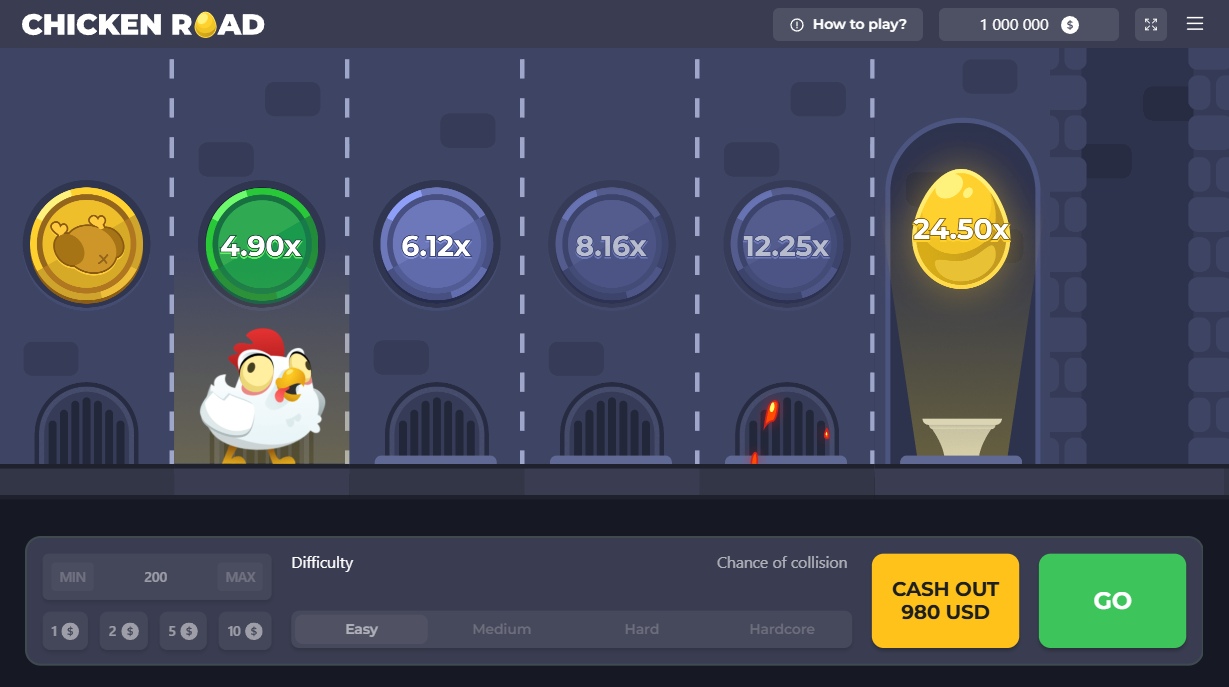
The base return to player figure for Chicken Road sits at 96.1 percent when wild substitution is active. Taking away the wilds from the reels would lower the RTP by approximately 1.8 percentage points, showing how much worth the substitution mechanic contributes. The figure is determined over millions of spins, so short sessions will deviate, yet the long-term expectation remains steady across UK-licensed sites that carry the title.
Volatility is ranked as medium-high, primarily because wilds appear less frequently than standard symbols. A session may pass twenty spins without a wild, trailed by a cluster that produces several four-symbol wins in quick succession. This unbalanced distribution creates the higher volatility ranking and clarifies why bankroll swings are more marked than in low-volatility titles. Players who favor steadier returns may consider the variance unpleasant, while those who accept occasional dry spells can gain when the wilds align.
Wild Symbol Placement and Reel Coverage
Wild symbols land on reels two, three, and four only, which means the outer reels never add to substitution. This limitation maintains the maximum number of wilds per spin at three, limiting the length of consecutive substitutions to four symbols when a wild lands in the centre. Because the wilds are confined to the middle reels, combinations on paylines one and five can be achieved more easily than those on the outer lines, a detail that becomes apparent during longer sessions. Players who track symbol distribution will see that the absence of wilds on reel one and five reduces the chance of five-of-a-kind wins, moving value toward four-symbol payouts instead.
The artwork depicts the wild as a stylised create account Chicken Road sign, keeping it instantly recognisable when it lands. Its appearance rate is slightly higher on reel three than on reels two and four, producing a small bias toward centre-line wins. This bias does not change the overall return to player figure, but it does shift the rhythm of line completions during individual spins. When two wilds land together on reels two and three, the game highlights every payline that can now form a win, giving immediate visual feedback on the substitution effect.
Widespread Misunderstandings Concerning Wild Substitution
One common misbelief is that wilds are able to substitute for scatters. In Chicken Road the scatter symbol is omitted from substitution, so a wild next to two scatters will not produce a free spin trigger. Another misunderstanding involves the direction of substitution; the game assesses lines only from left to right, meaning a wild on reel four cannot form a combination that begins on reel five. Clearing up these issues before playing reduces confusion when near-miss outcomes appear.
Some players believe that higher bets raise the chance of wilds, yet the random number generator treats every spin independently of stake size. The only variable that varies with bet level is the absolute value of each line win. Comprehending this separation between probability and payout size lets players to choose stakes based on bankroll rather than on imagined wild frequency, aligning expectations with the actual mechanics of the slot.
Leave a Reply