
Výkyvovost vysvětluje how often a kolik slot vyplácí výhry, a Aviator first time bonus GB volatility charakteristika je hlavním motivem, proč si hrající vybírají tuhle hru či se jí vyhýbají. Hra používá samostatný koeficient, jenž roste od 1.00× nahoru, a proto jeho nebezpečná úroveň je určena tím, jak dlouho tento koeficient obvykle vydržet předtím než spadne. Toto produkuje rozdělení, která není ani nízká ani střední v tradičním smyslu; jde o prudkou, vpravo zkosenou křivku, kde většina her skončí časně a část dosahuje vysokých hodnot. Pochopení této distribuci dává hráči nastavit praktické bankroll a session záměry místo hádání frekvence výplat. Následující části rozebírají určité mechanismy, co vytvářejí tento profil, matematiku pro očekávaným výnosem a praktická rozhodnutí, která plynou z těchto čísel.
In what manner the Crash Multiplier Defines Volatility
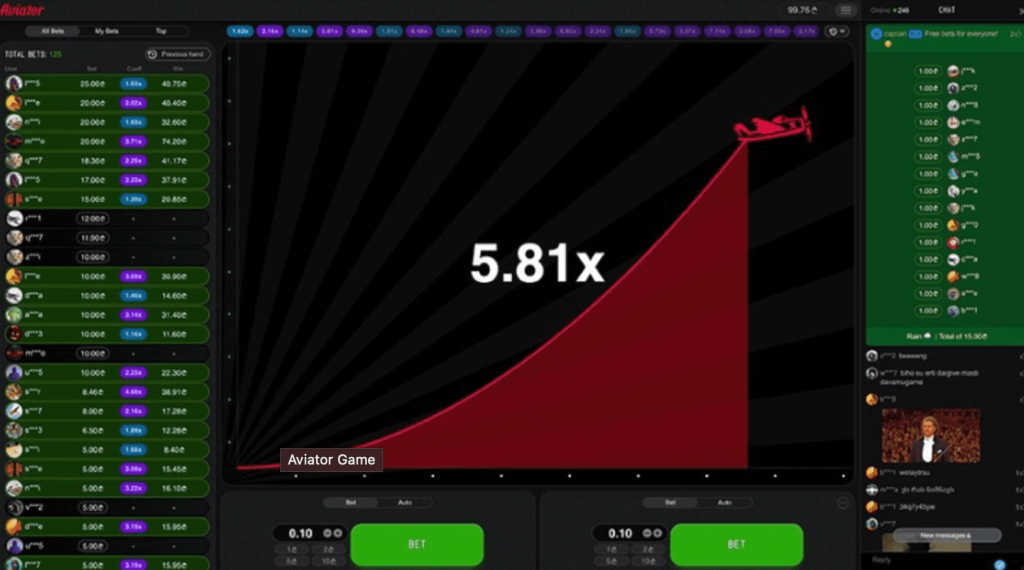
The crash multiplier is the single variable that decides every outcome in Aviator, and its growth pattern defines the volatility level. At the start of each round the multiplier begins at 1.00× and increases continuously; the round ends when the multiplier crashes at a randomly chosen point. Because the crash point is drawn from a distribution that heavily favors low values, the majority of rounds terminate between 1.00× and 2.00×. This creates frequent small losses offset by infrequent large wins when the multiplier climbs past 10.00× or higher. The result is a high-volatility experience even though the game has no reels or paylines: variance comes from the shape of the multiplier curve rather than from symbol combinations. Players therefore experience long sequences of quick, low returns punctuated by occasional large payouts, which is the classic signature of high-volatility slots.
Verifiably Fair Validation and Outcome Transparency
Aviator releases a SHA-256 hash of the crash point prior to each round starts, permitting any participant to validate that the outcome was not changed after bets were placed. After the round ends, the server shows the seed that produced the crash point, and players can recalculate the multiplier locally to verify it matches the displayed result. This verification process does not affect the volatility distribution, but it erases uncertainty about whether high or low crashes are being manipulated. A player who wants to study the distribution empirically can export several hundred verified rounds and calculate the observed frequency of multipliers above 5.00× or 10.00×. Such data collection offers a concrete check on whether the theoretical probabilities match the actual session experience, something that is rarely possible in traditional slot titles.
Round Mechanics and Instant Choices
Each Aviator round spans only a few seconds once the multiplier starts rising, so the player’s only choice is when to cash out. Two independent cash-out buttons allow a single bet to be separated into two separate objectives; for example, half the stake can leave at 1.50× while the other half continues until 3.00×. This mechanic adds a layer of control that classic slots do not have: the player can balance within the same round instead of across multiple spins. Because the multiplier updates continuously, timing is gauged in fractions https://www.bbc.co.uk/programmes/b01lblyy of a second, and latency between the server and the player’s device can change the realized multiplier by several decimal places. Grasping this timing constraint aids players establish conservative targets that offer a margin for network delay rather than aiming for the exact displayed value at the moment of the click.
RTP and Its Interaction Between Volatility
RTP, or RTP, is the share of total stakes that the game returns to players over a reddit.com very large number of rounds. Aviator’s recorded RTP sits at 97.00 percent, which is greater than many crash-style games yet still maintains a 3.00 percent house edge. Since the RTP is fixed, volatility does not change the long-run return; it only changes the path taken to reach that return. In practical terms, a player who makes one hundred 1.00 bets can expect roughly 97.00 back, but the spread of those 97.00 will include many sub-1.00 exits and a few multipliers above 5.00×. This relationship means that a higher RTP does not reduce perceived risk; it simply boosts the average outcome within the same volatile pattern. Reviewing the exact RTP value on the game’s information screen before a session verifies that the stated figure has not been altered by a particular operator.

Bankroll Management Under High Volatility
Extreme fluctuation requires a bankroll that can handle extended sequences of low exits without causing an early exit from the game. A practical guideline is to reserve at least fifty times the average bet size, so a 1.00 average bet would call for a 50.00 starting balance. Within that balance, players can define a stop-loss limit—commonly 25 percent of the session bankroll—and a profit target that is a multiple of the same amount. Because the RTP is known, these limits are not arbitrary; they are chosen so that the probability of hitting the profit target before the stop-loss stays above 50 percent over repeated sessions. Monitoring results after each round, rather than only at the end of the session, prevents the common error of increasing stakes to recover losses, which magnifies the effect of the already high variance.
Bet range and Maximum Win Potential
Bet size directly impacts how volatility plays out because larger bets magnify the same multiplier swings. Aviator allows bets from 0.10 to 100.00 per round, enabling both low-stakes testing and high-stakes exposure. The theoretical maximum multiplier is uncapped, but the probability of reaching extremely high values drops exponentially, so the practical ceiling most players see lies between 50.00× and 200.00×. A 100.00 bet that reaches 50.00× returns 5,000.00, yet such an outcome occurs far less often than a 1.20× cash-out. Because the upper limit is open-ended, players must decide in advance whether they will cash out at a fixed target or attempt to ride the multiplier for larger gains. This decision framework transforms the wide bet range into a controllable risk dial rather than an open invitation to chase unlimited wins.
Comparing Aviator to Reel-Based Volatile Slots
Standard high-volatility slots attain their risk profile through sparse payline hits and substantial symbol multipliers, whereas Aviator centers all variance into a sole multiplier curve. This structural difference implies that Aviator has no counterpart to free-spin rounds or scatter pays; every round is decided in real time without additional features. Consequently, session length is more compact and the feedback loop between decision and outcome is instant. Players accustomed to waiting for bonus triggers may consider the constant cash-out choice more mentally demanding, while those who prefer continuous control may value the absence of dead spins. The comparison highlights that volatility is not a unique number but a product of game architecture, and Aviator’s architecture generates a unique risk pattern even when its RTP sits in the same range as many reel-based titles.
After examining the mechanics, mathematics, and practical constraints that influence Aviator’s volatility, the most evident takeaway is that success relies on aligning stake size, cash-out targets, and session limits with the established distribution of outcomes rather than with hopes of an extreme multiplier. Players who check the RTP, record their own results, and keep a bankroll sized for common small exits will encounter the game’s risk profile as a controllable variable instead of an unpredictable swing. The next step is therefore to launch the information panel, verify the current RTP, define two explicit cash-out values, and trial a short session with the designated bankroll limits before scaling up.
Leave a Reply